
What This Problem Actually Costs You
A garage door that won't close, or one that starts closing and then reverses back up, isn't a quirk you can live with for another season. Every night it sits open a crack, you're heating or cooling the outdoors, inviting dust and wind-blown debris into the garage, and leaving a direct entry point into your home unsecured. As temperatures start dropping heading into late fall, an open or malfunctioning garage door also means cold air pushing straight into any attached living space, and moisture from the first real cold snaps settling into a garage that was never meant to stay open. What usually starts as a simple sensor adjustment or a worn part can turn into a seized opener or a snapped spring if the door keeps fighting itself to close. The fix now is almost always cheaper than the fix in January.
The Two Symptoms, and Why They're Different
These two problems often get lumped together, but they point technicians in different directions:
- Starts closing, then reverses: The door begins its downward travel, stops partway, and goes back up on its own. This almost always means the opener is detecting something it interprets as an obstruction, whether real or false.
- Won't close at all: You press the button and nothing happens, or the door tries to move and immediately stops. This points more toward a wiring, sensor, or control issue preventing the close command from completing.
Both symptoms share overlapping causes, which is why a technician checks them in a specific order rather than jumping straight to the most expensive possibility.
What a Technician Checks, in Order
1. The Safety Sensors (Photo Eyes)
This is the first stop for almost every reversing or non-closing door, and for good reason: it's the most common cause and the cheapest to fix. The two small sensors near the bottom of the track must be aligned and have a clear, unbroken line of sight to each other. Dust kicked up by Oklahoma wind, spiderwebs, a shifted bracket from a bump, or even low-angle fall sunlight hitting the lens at the wrong time of day can trigger a false obstruction reading. The fix is usually just cleaning the lenses and realigning the brackets until both indicator lights read solid rather than blinking. No tools beyond a level and a few minutes, in most cases.
2. The Track and Rollers
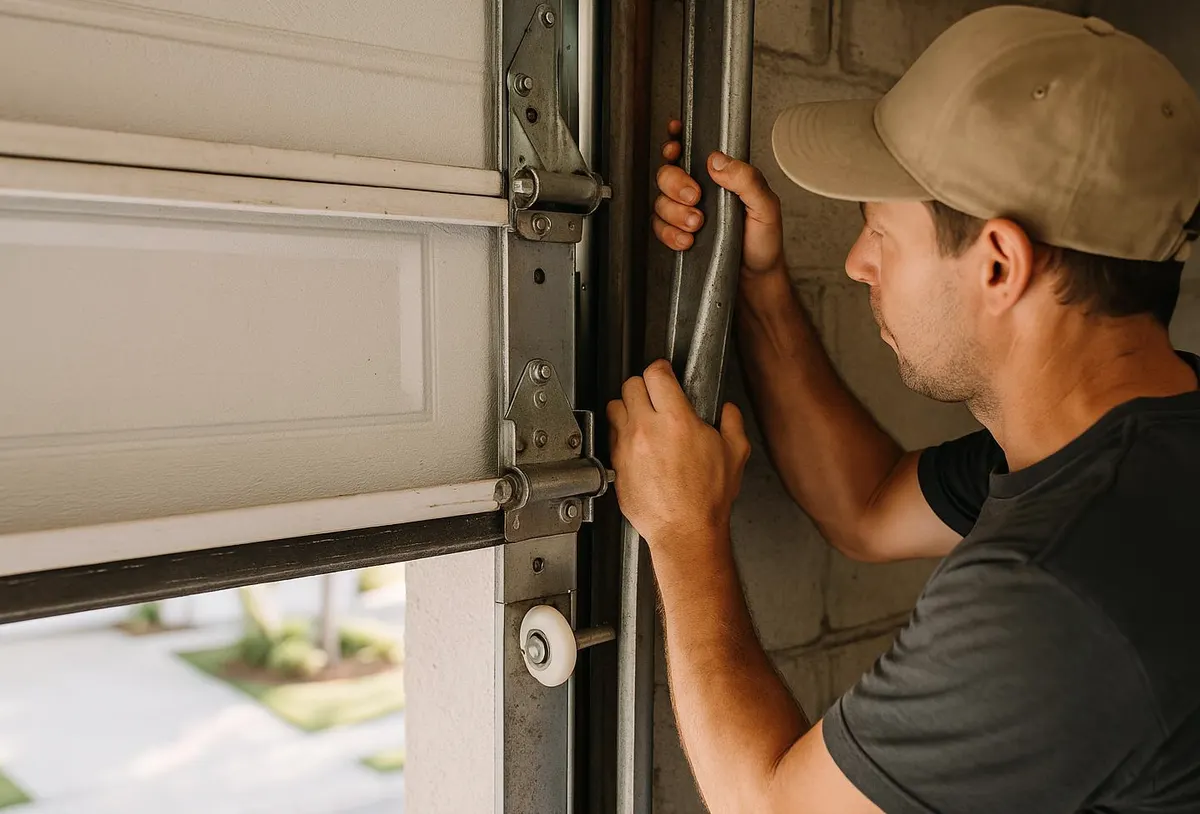
Next, a technician checks the vertical and horizontal tracks for anything physically blocking the door's path: a stray toy, a rock, built-up grime, or a section of track that's bent or pulled slightly out of alignment. Temperature swings between hot days and cooler nights can cause metal tracks to expand and contract slightly, which over time can loosen the mounting brackets holding them to the frame. A loose or warped track section can bind rollers just enough to trip the opener's force sensor. The fix ranges from re-tightening brackets to straightening or replacing a damaged track section.
3. The Opener's Limit and Force Settings
If the sensors and track check out, the next step is the opener itself. Every garage door opener has limit settings that tell it how far to travel and how much resistance to tolerate before reversing as a safety measure. These settings can drift over time, or get knocked out of adjustment after a power surge from a storm. If the force setting is too sensitive, the door will reverse even when nothing is actually in its way. Adjusting these settings is usually a straightforward recalibration, though it requires knowing the specific opener model's adjustment points.
4. The Springs
This is where things get more serious. If the door feels unusually heavy, closes slower than it used to, or makes a visible jerking motion before reversing, worn torsion or extension springs are often the cause. A spring that's lost tension can't properly counterbalance the door's weight, so the opener strains to force it down and the safety mechanism kicks in and reverses it to prevent damage. Spring replacement is not a DIY repair — these parts are under extreme tension and improper handling can cause serious injury. This is a job for a trained technician with the right tools.
5. The Opener's Motor and Gears
If everything above checks out, the issue may be internal to the opener itself: worn gears, a failing motor, or a circuit board nearing the end of its life. Openers typically last ten to fifteen years, and a unit that's struggling with every close cycle may simply be due for replacement rather than another repair.
When to Call Norman Garage Door
If you've checked the sensors yourself and the door is still reversing or refusing to close, it's time to call in a technician rather than keep testing it. Norman Garage Door handles everything from sensor and opener diagnostics to full Spring Replacement for doors that are straining to close, and our Garage Door Opener Repair & Installation service covers everything from recalibrating force settings to replacing an aging unit entirely. If your door won't close and you're worried about leaving your home exposed overnight, we also offer Emergency Garage Door Service so you're not stuck waiting until morning.
If your garage door is giving you trouble heading into the colder months, call Norman Garage Door today and get it fixed before it becomes a bigger problem.